With each passing day, the signs of spring grow stronger, and we can now feel the vitality of the plants and trees.
How are you all getting on?
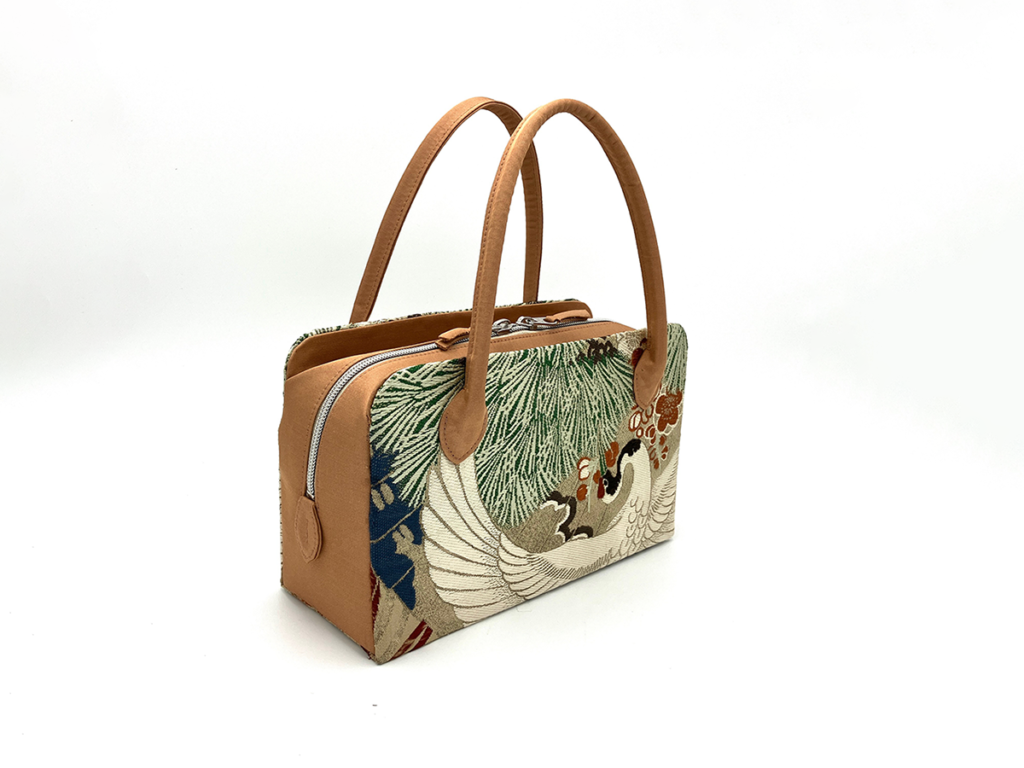
It’s been a while since my last blog post, but today I’d like to introduce my upcycled Rikyu bag, made from a maru-obi sash from the late Taisho to early Showa periods. After much trial and error over time, I’m really pleased with how it’s turned out. I’d love for you all to have a look!
Now, this maru-obi is a truly exquisite piece, with a design that evokes a bygone era and was likely worn on special occasions. The beauty of the weaving, passed down through the ages, is clearly evident to the eye. It almost feels as though the vibrant memories of the day it was worn still linger within it. I decided to bring this vintage obi back to life for the modern era through upcycling, and set to work straight away. How do you find it? I would be delighted if you could sense an atmosphere as though a bygone era has been gently breathed back to life.
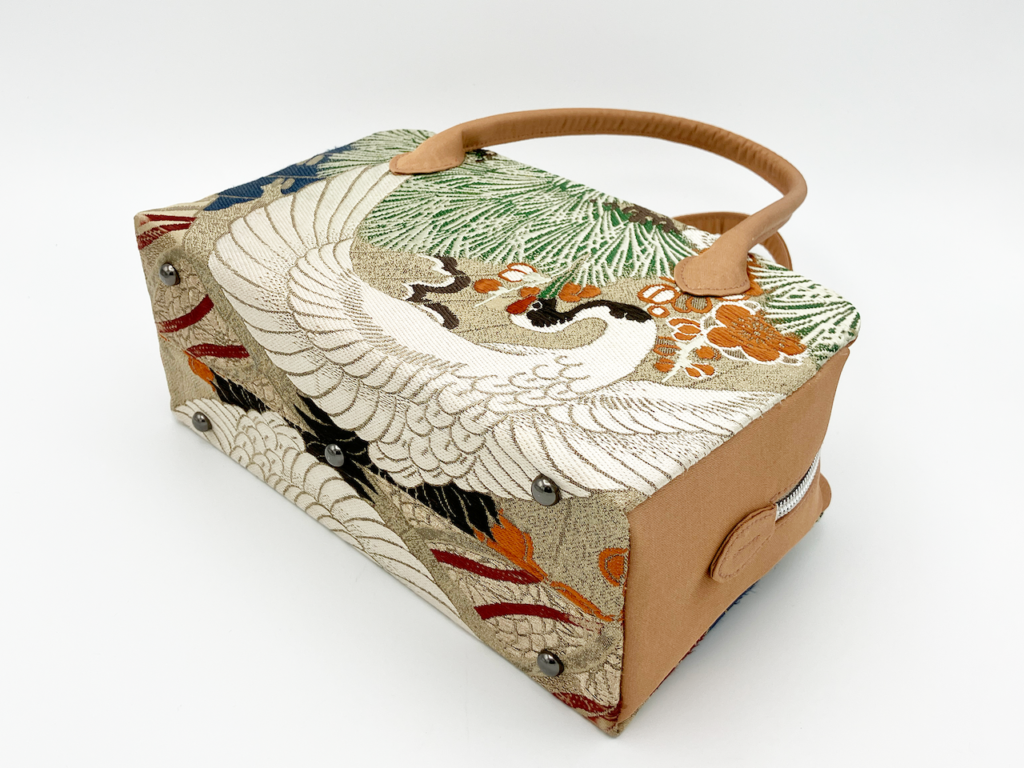
We have coordinated the colours of the handles and other details to complement the subdued tones characteristic of vintage obi fabric. We have paid particular attention to the way the pattern on the obi fabric emerges. We crafted this piece with the utmost care, ensuring that the image of the crane - a symbol of longevity and vitality - spreading its wings is showcased to the fullest.
As you can see, this maru obi features symbols of pine, plum and cranes - auspicious motifs that embody wishes for longevity and prosperity.
The striking image of a crane with its wings spread wide exudes a sense of elegance. Furthermore, the unique texture of aged silk and the depth of colour, which is no longer found in modern fabrics, are particularly appealing. To ensure this charm is preserved, each piece has been carefully crafted by hand.
Even when upcycled into a new form, the story continues. I sincerely hope that many people will discover the beauty of upcycling, where the spirit of the times and the art of craftsmanship come together.